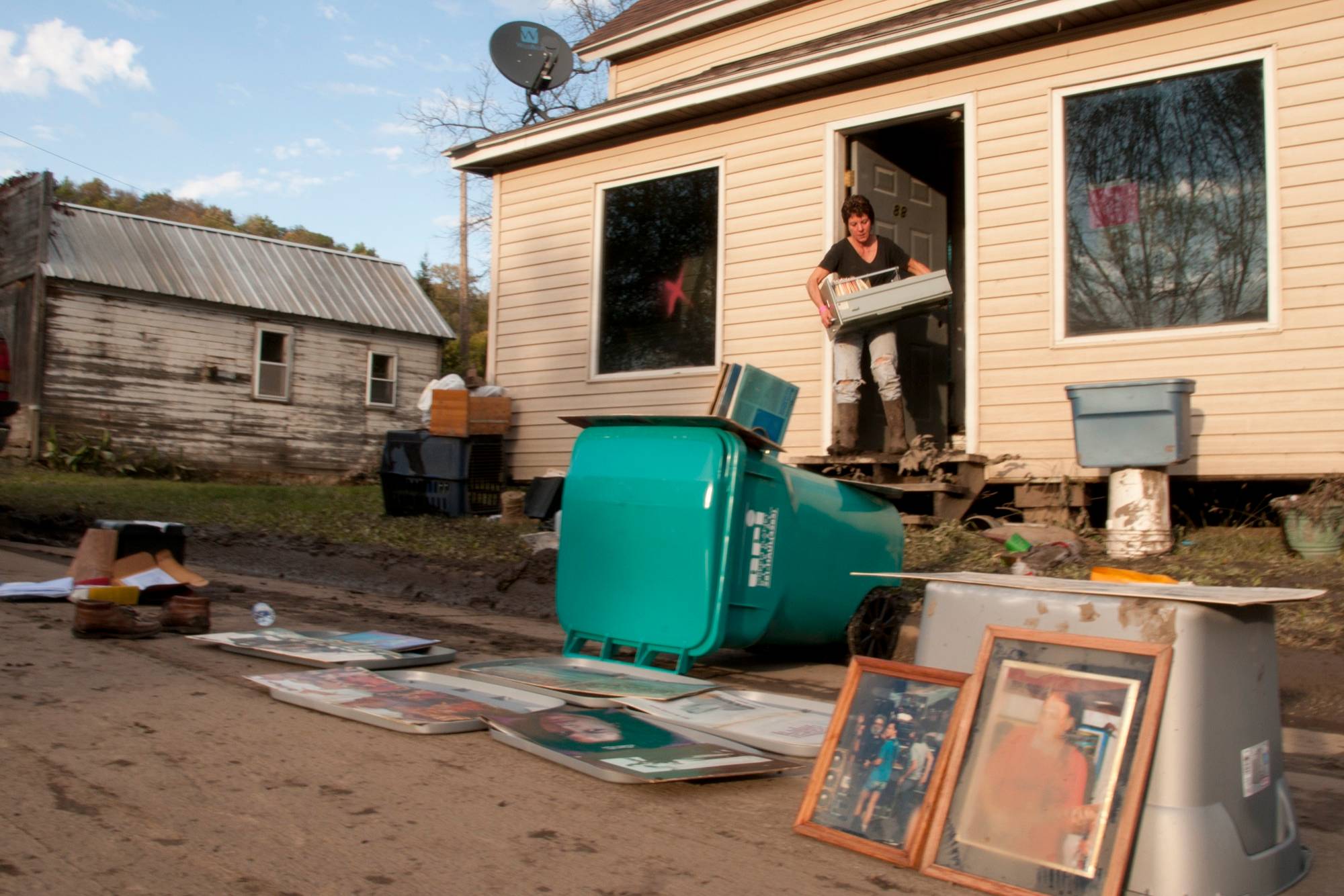

A storm, a fire or a burst pipe starts two clocks. One is the damage itself, which spreads every hour it is left alone. The other is your claim. What you do in the first two days decides much of what you can prove later, and almost none of it costs more than attention.
Work through these in order. Each one protects the next.
Right away
Make it safe
People and pets first, then the house. Nothing in it is worth an injury, and no insurer expects you to take risks to protect evidence.
In the first few hours
Stop the damage from getting worse
Your policy almost certainly requires you to protect the property from further damage. Insurers call it mitigation, and a claim can shrink when damage spreads because nothing was done.
- Water: shut it off at the main and open faucets to drain the lines.
- Roof: tarp it, or have someone tarp it, before the next rain.
- Openings: board up broken windows and doors.
- Belongings: move anything undamaged somewhere dry.
- Moisture: start drying wet rooms with fans and a dehumidifier. Mould can start growing within 24 to 48 hours.
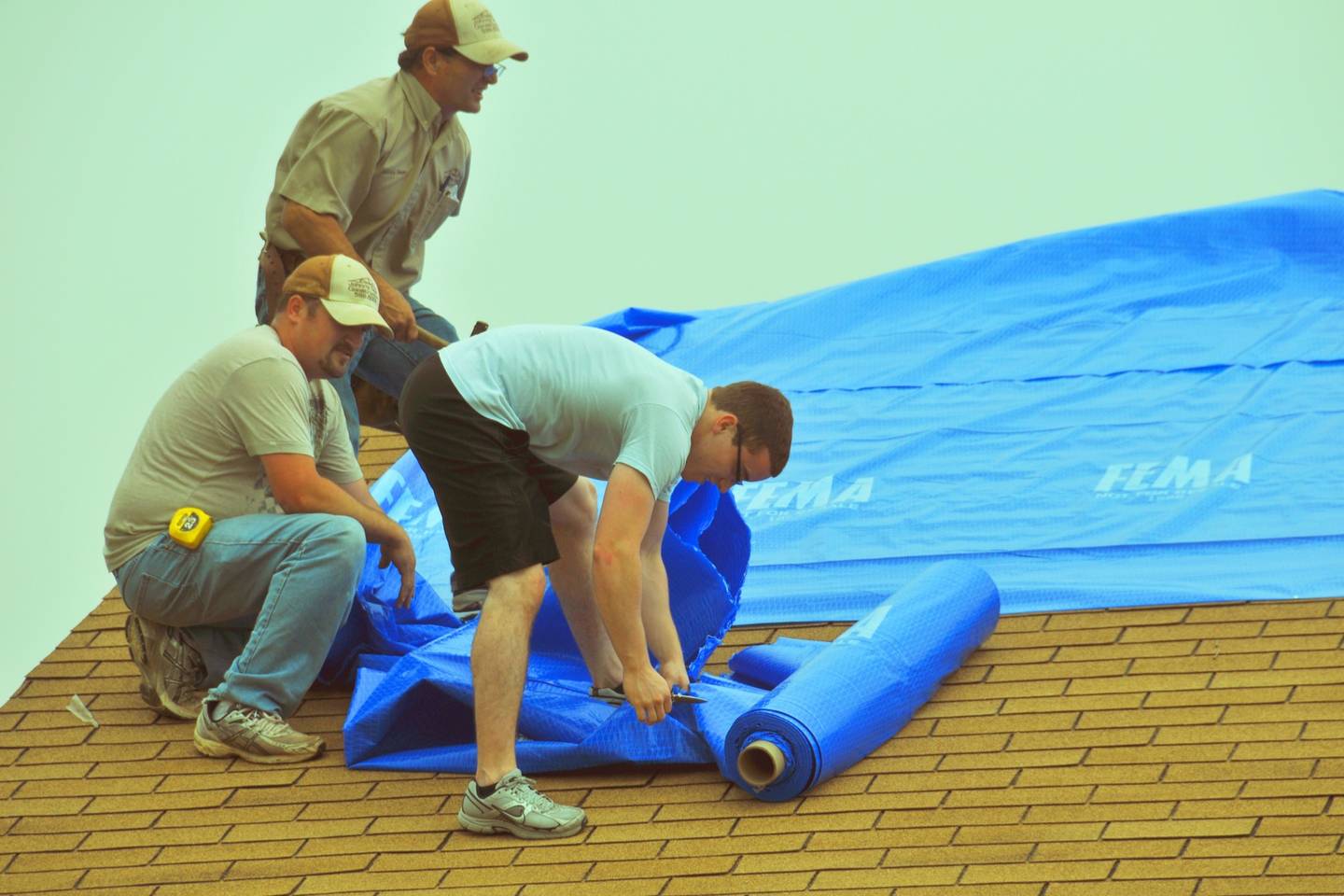
A temporary roof after a tornado in Oklahoma. A tarp is mitigation; new shingles are a repair.
Photo: Win Henderson / FEMA
Keep it temporary, and keep the receipt for every tarp, board, fan and hour of labour. Reasonable mitigation costs are usually paid as part of the claim. Permanent repairs made before the insurer has seen the damage are where disputes begin.
Before anything moves
Document before you clean
Photos and video taken before cleanup are the strongest evidence you will ever have.
- Walk every room on video, inside and out, saying the date, the room and what you see.
- Shoot wide, then close: a photo from the doorway, then the damage up close.
- Show the cause: the fallen limb, the split pipe fitting, the hail on the lawn.
- Measure water lines with a tape measure in the frame.
- Photograph labels: brand, model and serial numbers on appliances and electronics.
- Keep what is damaged until it is documented and, ideally, seen by the adjuster. For carpet or drywall, keep a cut sample.
- Back it all up somewhere other than your phone.
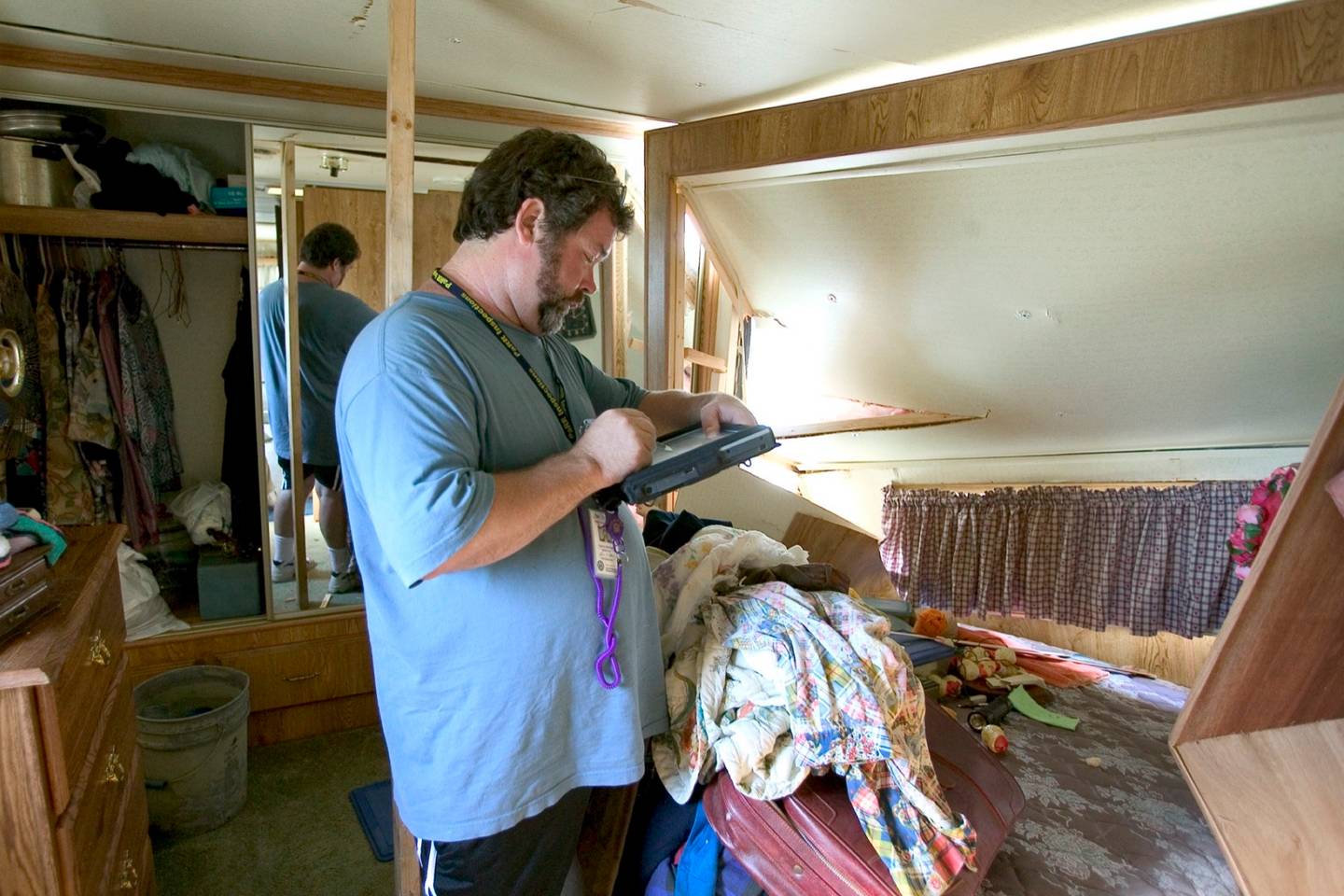
An inspector records a bedroom after Hurricane Charley. Your own photos, taken before anything moved, should be at least this thorough.
Photo: Andrea Booher / FEMA
Within 24 hours
Report the claim
Call your insurer or use their app as soon as you can. Then:
- Write down the claim number, the date and time, and the name of everyone you speak to.
- Ask for a certified copy of your full policy, including the declarations page and every endorsement. The policy you remember is rarely the whole policy.
- Ask about living expenses if you cannot stay in the home. Most homeowners policies include loss-of-use coverage for hotels, meals and other extra costs.
- Stick to what you saw. You do not need to guess at the cause or put a value on the loss on the first call.
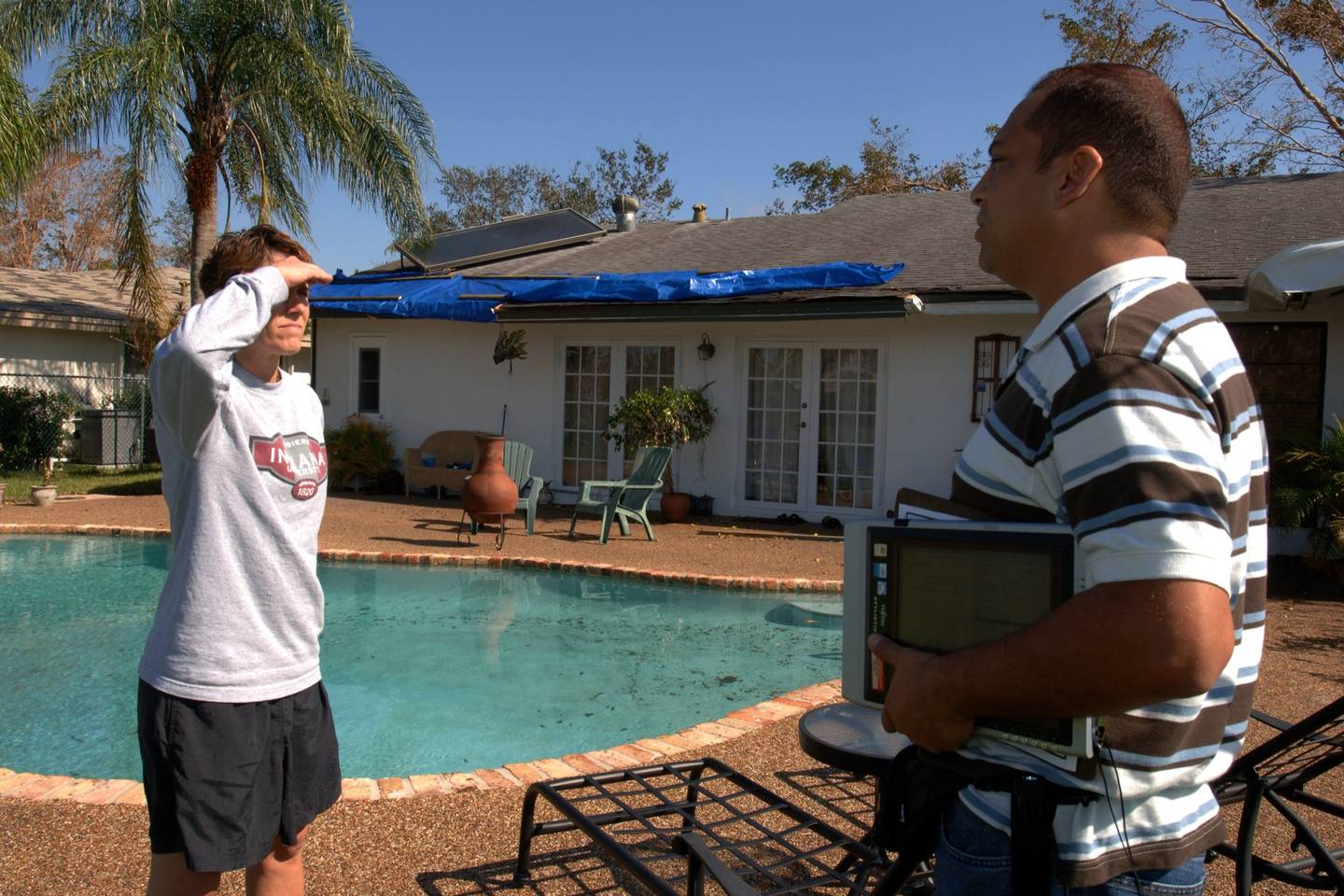
A homeowner meets an inspector after Hurricane Wilma, with the roof already tarped. The first visit goes better when the damage is documented and the mitigation is done.
Photo: Jocelyn Augustino / FEMA
Day two, and every day after
Start a claim file
Keep one folder, paper or digital, with every photo, receipt, letter and email. Add a call log, and fill it in after every conversation:
| Date | Who | What was said | Next step |
|---|---|---|---|
| Oct 3 | J. Ruiz, insurer | Claim opened, adjuster to call in 3 days | Send photos by email |
| Oct 6 | M. Chen, field adjuster | Inspection booked for Oct 9, 10am | Keep damaged carpet |
A claim can run for months. The file is what lets you, or a public adjuster working for you, answer every question the insurer asks with a date and a document.
Mistakes that are hard to undo
- Throwing things out too early. Once a damaged item is gone, its value is your word against the insurer's.
- Making permanent repairs before the inspection. Temporary fixes protect the claim. Finished repairs can hide what the adjuster needed to see.
- Signing whatever the first contractor hands you. Some contracts assign your claim's benefits to the contractor. Read before you sign, and never sign under pressure on the doorstep.
- Guessing on the record. "It's probably been leaking for a while" can turn a covered sudden loss into an excluded one. Describe what you saw, not what you suspect.
- Missing a deadline. Your policy sets duties after a loss, and some insurers set a deadline for a sworn proof of loss once they ask for one. Put every date in your claim file.
Where a public adjuster fits
The insurer's adjuster works for the insurer. A public adjuster is licensed to work for you: they assess the damage, prepare the claim and negotiate the settlement, usually for a percentage of what is paid. They earn their fee most clearly on large or complicated losses and on claims that have stalled.
If you bring one in, the first thing they will ask for is the file you started on day two.
Save or print this
The 48-hour checklist
- Everyone is out and safe; gas, water or power shut off if needed
- Roof tarped, openings boarded, water stopped
- Wet rooms drying with fans and a dehumidifier
- Every room on video, wide and close, before cleanup
- Serial numbers photographed; damaged items kept
- Claim reported; claim number and contact written down
- Full certified policy requested
- Receipts for every emergency cost in one folder
- Call log started
This is general information, not legal advice. Your policy's wording decides what is covered, and rules differ from state to state.